If you have read our SCR vs servo or IGBT vs servo guides, you already know why we prefer solid-state. This page answers the next question: which of the two?
What they share
- Nothing moves to correct the voltage — no motor, no carbon brush, no relay contact.
- Silent. Only a small cooling fan runs when the unit gets warm.
- Fast: milliseconds, not seconds.
- Nothing wears out each time they correct.
The one real difference: a staircase or a ramp
An SCR stabilizer is a staircase. Its transformer has fixed steps. When the voltage moves, it jumps to the step that lands closest to 220V. It always lands within ±5% — between about 209V and 231V — but not always on 220V exactly.
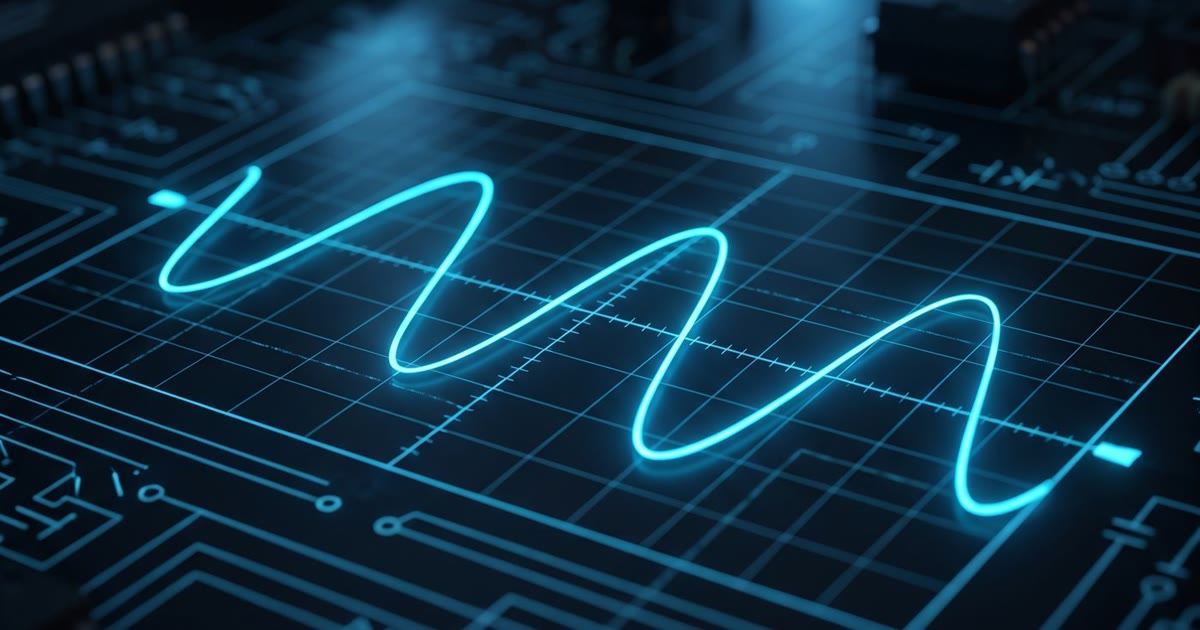
An IGBT stabilizer is a ramp. It has no steps. It builds exactly the voltage needed, all the time, and lands within ±2%. Because it builds the wave itself, it also cleans it: the output is a pure sine with distortion under 3%.
Side by side
| SCR (thyristor) | IGBT (inverter) | |
|---|---|---|
| How it corrects | Jumps between transformer taps | Builds the voltage continuously |
| Output accuracy | 220V ±5% | 220V ±2% |
| Response | About 20 ms | 0 ms rated |
| Holds 220V from | 95–250V (keeps working 85–268V) | 90–310V |
| Wave shape | Follows the mains | Pure sine, distortion under 3% |
| Efficiency | ≥95% | ≥96% |
| Sizes (Voltec) | 1, 2, 3, 5, 10 kVA | 550VA, 2, 5, 10, 15, 20 kVA |
| Price | Lower | Higher |
Choose SCR when…
- Your machine's manual accepts ±10% or wider on its input. Most equipment does.
- Your voltage stays between 95V and 250V, even on the worst evening.
- You want solid-state speed and long life at a lower price.
- Typical loads: aesthetic and dental lasers, RF devices, ultrasound, computers, AV, and home or shop loads up to 10 kVA.
Choose IGBT when…
- Your machine's manual asks for ±5% or tighter, or a clean or "regulated" supply.
- Your voltage falls below 95V or jumps above 250V.
- You run inverter ACs in a weak-voltage area and want one unit for the whole home.
- Typical loads: lab analysers, imaging, CNC and laser cutters, servers and broadcast, high-end audio, and whole homes up to 20 kVA.
A simple test: find your worst evening
The best way to choose is to know your real voltage. Use a plug-in voltmeter, or read the display of your current stabilizer, for one week. Note the lowest reading (usually 7–11pm in summer) and the highest (usually late at night).
- Lowest above 95V and highest below 250V → SCR covers you.
- Lowest below 95V, or highest above 250V → IGBT.
Typical cases
These are the kinds of requests we get every week, and what we would usually suggest:
| Situation | Suggestion | Why |
|---|---|---|
| Skin clinic with a hair-removal laser; evening voltage 170–240V; manual says ±10% | SCR | Fast, silent, inside the machine's tolerance, lower cost |
| Home with two inverter ACs; evening voltage drops to 90–100V | IGBT | Holds 220V from 90V; SCR only from 95V |
| Sign shop with a CO2 laser cutter and a small CNC router | IGBT | Motion drives and laser supplies like a clean, tight supply |
| Small diagnostic lab with analysers and a PC | IGBT | Clean pure sine and ±2% for lab instruments |
| Office with computers, printers and a server rack, voltage 180–240V | SCR | Fast and silent; ±5% is well inside what computers accept |
Whichever you choose, a stabilizer fixes voltage, not outages. For machines that must not lose power mid-job, add a UPS after the stabilizer. More on that in stabilizers for laser, CNC and medical machines.
Still unsure?
Send us two things on WhatsApp: a photo of your machine's nameplate (or your appliance list), and your lowest evening voltage. We will tell you which one you need — and if the SCR is enough, we will say so.