
Both types protect your appliances. They just do it in very different ways. A servo stabilizer turns a small motor. An SCR stabilizer flips silicon switches. That one difference decides how fast it reacts, how long it lasts and what it is good for.
How a servo stabilizer works
Inside a servo stabilizer is a round copper winding with a bare track on top. A carbon brush sits on that track. A small motor moves the brush along it. Move one way, the voltage goes up. Move the other way, it comes down. A control card watches the output and tells the motor where to go.
It is a good design. The correction is smooth, with no steps, and the output is tight — our servo units hold 220V ±1%. But it has two built-in limits. The brush and motor wear. And the motor can only turn so fast: our units correct at about 25–30 volts per second.
How an SCR stabilizer works
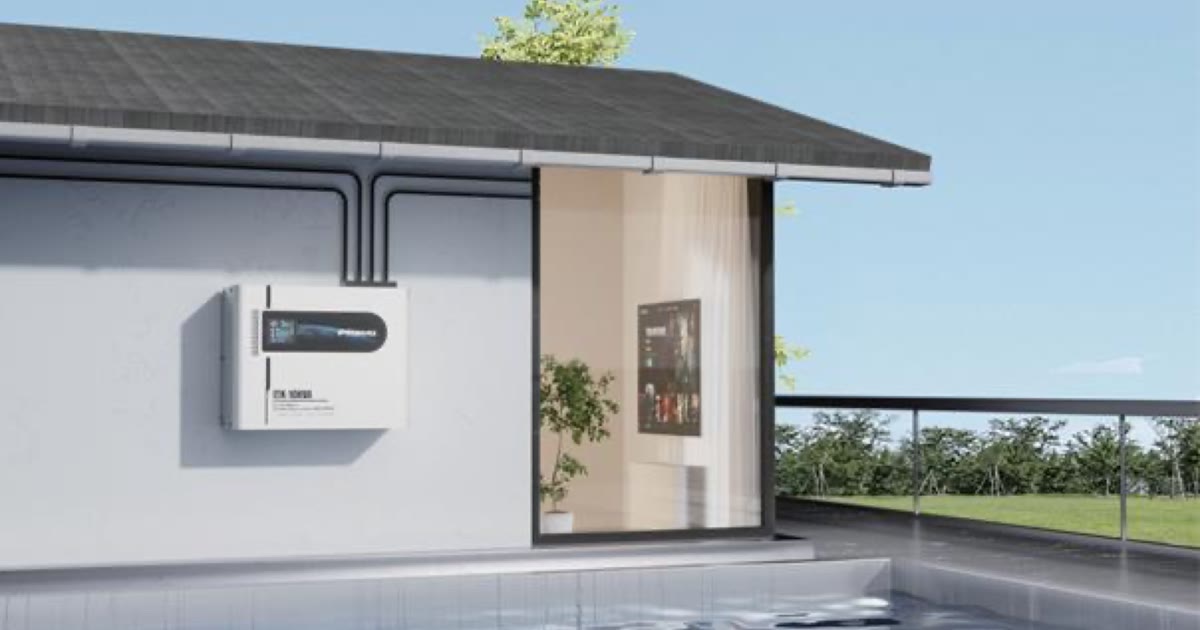
An SCR stabilizer has a transformer with several taps — fixed points that give a little more or a little less voltage. A control board reads your incoming voltage every cycle and decides which tap brings the output closest to 220V. Then it switches to that tap with a pair of thyristors (SCRs).
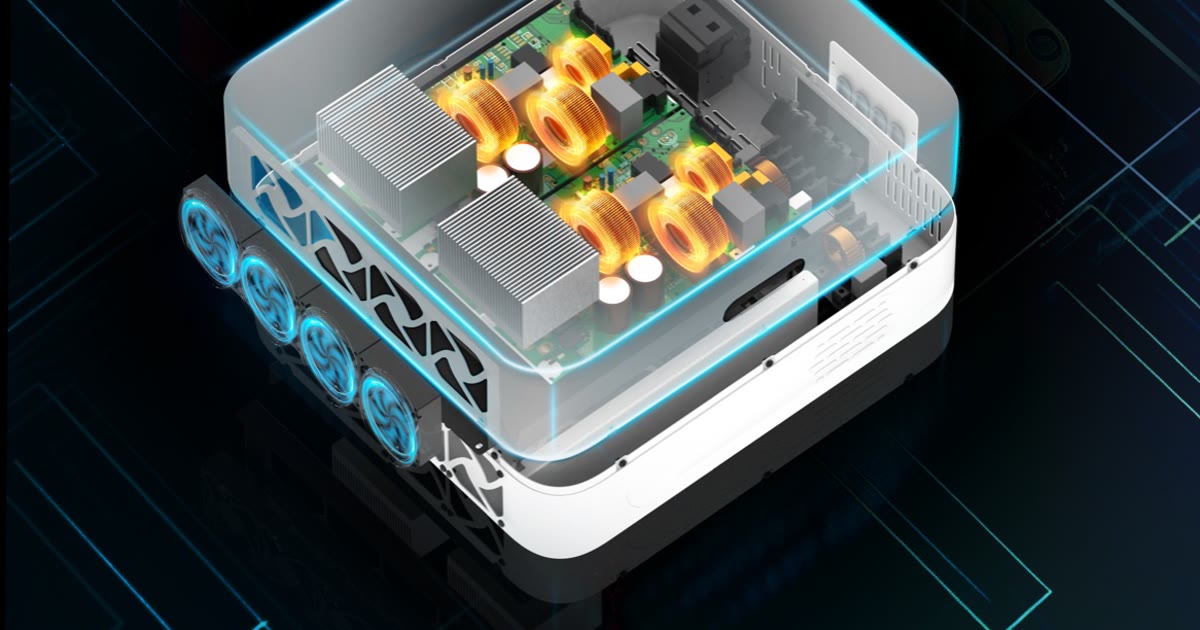
A thyristor is a silicon switch. It has no metal contact, so nothing sparks and nothing burns. It switches at the moment the AC wave crosses zero, so the change is clean. The whole job takes about 20 ms — one cycle of the mains. The Voltec SCR range holds 220V ±5% from a 95–250V input.
Side by side
| Servo (SVC) | SCR (thyristor) | |
|---|---|---|
| What does the correcting | Motor and carbon brush | Thyristors (silicon switches) |
| Parts that wear with each correction | Brush, motor, gears | None |
| Speed | About 25–30 V per second — about 2 seconds for a 60V drop | About 20 ms |
| Output | 220V ±1%, smooth | 220V ±5%, in steps |
| Input range (Voltec) | 100–280V on the 10 kVA, choose your range | 95–250V (keeps working 85–268V) |
| Noise | Motor hum | Silent |
| Dust and heat | Dust settles on the brush track and gears | Sealed switches on a heatsink, fan-cooled |
| Efficiency | >96% | ≥95% |
| Sizes (Voltec) | 1–30 kVA single-phase, up to 500 kVA three-phase | 1–10 kVA single-phase |
Notice what is not on the list of differences: efficiency. Both waste only a few percent. Anyone who tells you one will halve your bill is not being honest.
The speed problem, in numbers
It is a summer evening. Neighbours switch on their ACs and the voltage at your meter drops from 220V to 160V in a moment.
- With a servo: the motor starts turning at about 28 volts per second. It needs a little over two seconds to bring the output back to 220V. For those two seconds, your equipment sees something closer to 160V than 220V.
- With an SCR: the board sees the drop on the next cycle and jumps to a higher tap. About 20 ms later, the output is back inside 220V ±5%.
A fridge does not care about two seconds. A laser power supply, an ultrasound machine or a computer often does — it can reset, throw an error or abort the job. That is why solid-state is the right tool for sensitive equipment.
Good servo units also have a fast cut-off relay for dangerous voltage. But a cut-off switches your equipment off. It does not correct the voltage.
Where SCR wins
- Speed. About 20 ms instead of seconds.
- Long life. No brush to wear down, no motor to burn out, no gears to strip.
- Silent. No hum and no click. Right for a clinic room, a bedroom or an office.
- Dust. There is no open brush track for dust to settle on, and no brush shedding carbon inside. See what dust does to a servo.
- Size. It hangs on a wall like a small cabinet.
Where servo still wins
- Tighter steady output. Once it catches up, a servo holds ±1% with no steps. If your equipment manual asks for better than ±5%, choose a servo — or better, an IGBT, which holds ±2% with no delay.
- Bigger sizes. Our SCR range stops at 10 kVA. For 15–30 kVA on one phase, or three-phase industrial loads, servo is the proven option.
- Very low voltage on a big load. Servo units can be built for unusual input ranges — our 30 kVA servo works from 60V.
What does ±5% actually mean?
It means the output stays between about 209V and 231V. Most equipment sold in Pakistan is designed for 220–240V with at least ±10% tolerance. Check the label or the manual of your machine. If it says ±10% or wider, an SCR keeps it well inside its limits. If it says ±5% or tighter, choose IGBT.
Which one should you buy?
- Laser, ultrasound, clinic device, computers or AV? SCR.
- Home or shop up to 10 kVA, and you want nothing to service? SCR.
- Equipment that needs tighter than ±5%, or voltage below 95V? IGBT.
- 15 kVA or more on one phase, or three-phase? Servo, or a three-phase static system.
- Your servo works fine and runs ordinary appliances? Keep it. See the signs it is time to replace it.
We sell both
Voltec imports servo stabilizers from 1 to 30 kVA and SCR stabilizers from 1 to 10 kVA. We have no reason to push one over the other — we would rather you buy the right one once. Send us your load and we will quote both side by side. Read the full background in our guide to solid-state stabilizers.