SCR in one sentence
An SCR stabilizer is a transformer with several taps, where silicon switches called thyristors — not relays, and not a motor — choose which tap feeds your appliance.
What is a thyristor?
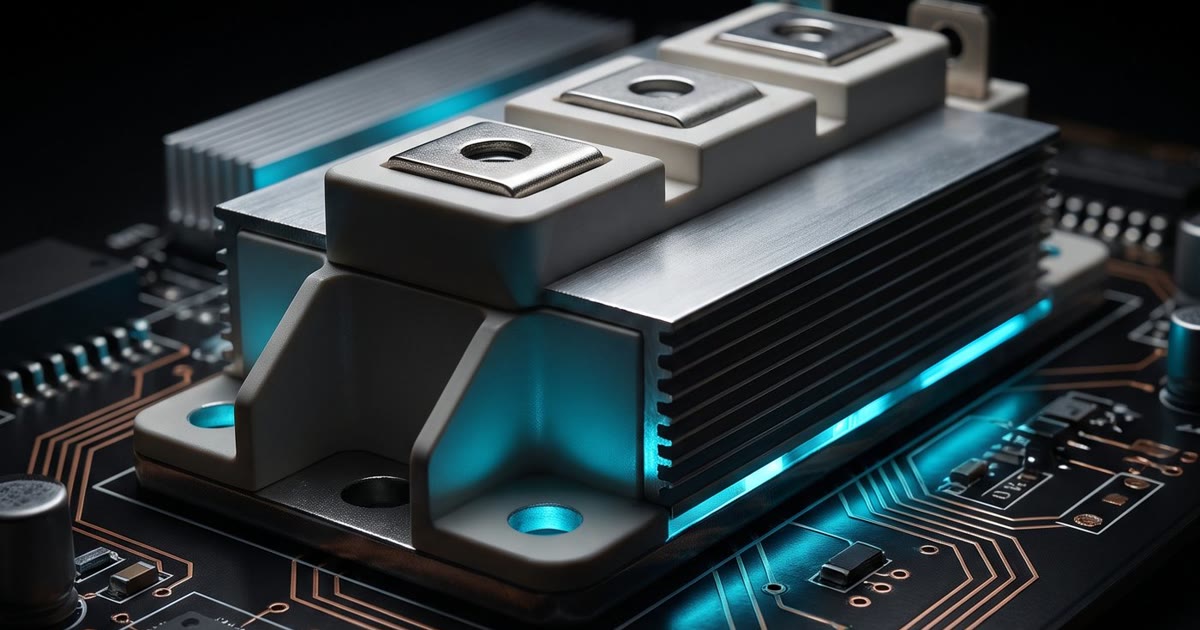
SCR stands for silicon-controlled rectifier. Most people call it a thyristor. It is a switch made of silicon, built for heavy AC power. It has no metal contacts and no moving parts.
A thyristor has one useful habit. Once it is switched on, it stays on until the current falls to zero. On 50 Hz mains, the current crosses zero 100 times a second. So a thyristor naturally switches at the zero point — the quietest moment of the wave. That is why it does not spark.
Thyristors are not new. Industry has used them for decades in motor soft-starters, welding machines, heaters and power transmission. What is new is that they are now cheap and reliable enough to put in a stabilizer for your home or clinic.
How the stabilizer uses it
- A control board measures your incoming voltage, every cycle.
- It works out which transformer tap will bring the output closest to 220V.
- It switches on the thyristor pair for that tap, at the zero point of the wave.
- If the voltage moves again, it repeats. The whole job takes about 20 ms.
SCR vs relay: same idea, different switch
A relay stabilizer (AVR) also picks between transformer taps. The difference is the switch. A relay is a metal contact that physically snaps shut. Each snap makes a small spark, a click, and a little wear. Over time the contacts pit and burn.
A thyristor has no contact to snap. It switches with silicon, silently, with no spark and no wear. You can think of an SCR stabilizer as a relay stabilizer that grew up.
And compared with a servo? A servo moves a carbon brush with a motor, which is smooth but slow — about 25–30 volts per second. An SCR is far faster and has no brush to wear. See SCR vs servo, side by side.
Reading an SCR spec sheet
Here is what each line on the Voltec SCR data sheet means:
| Spec | Voltec SCR range | What it means for you |
|---|---|---|
| Input range | 95–250V | Across this range, output is held at 220V ±5% |
| Works from | 85–268V | The unit stays on here, but output may be outside ±5% |
| Output | 220V ±5%, 50/60 Hz | Output stays between about 209V and 231V |
| Correction | Stepped, about 20 ms | Jumps to the nearest tap within one mains cycle |
| Efficiency | ≥95% | Wastes only a few percent as heat |
| Protection | Over/under-voltage, overload, over-temperature, short circuit | Cuts off before bad power reaches your equipment |
| Restart delay | Short 5 s / Long 200 s | After a cut-off, waits before restoring power: 5 seconds for electronics, about 3 minutes for fridges and ACs so the compressor can settle |
What an SCR stabilizer is good for
- Laser machines — aesthetic, dental and hair-removal lasers, where a motor's delay is too slow.
- Clinic devices — ultrasound, RF and body-contouring platforms that want steady, spark-free power.
- Electronics — computers, AV, networking and small servers.
- Homes and shops where you want nothing to service and your voltage stays between 95V and 250V.
- Quiet rooms — clinics, bedrooms and offices. No click, no hum.
What it is not
An SCR stabilizer corrects in steps. It does not build a new wave, so it does not clean up distortion on the mains, and it holds ±5% rather than ±1–2%. If your equipment asks for a tighter tolerance or a clean sine wave, or your voltage falls below 95V, choose an IGBT stabilizer instead. Not sure? Read SCR vs IGBT.
Sizes in the Voltec SCR range
| Model | Typical use | Net weight |
|---|---|---|
| 1 kVA | Sensitive electronics and instruments | 6.4 kg |
| 2 kVA | Electronics and small clinic devices | 7.5 kg |
| 3 kVA | A laser, ultrasound or clinic machine | 12 kg |
| 5 kVA | Laser machines; a home or shop | 18.4 kg |
| 10 kVA | Larger lasers and clinic equipment; a bigger home or shop | 25.3 kg |
The Voltec SCR range is imported, checked and stocked in Lahore, and backed by our own service team. For the bigger picture, read our guide to solid-state stabilizers.